
- All
- Product Name
- Product Keyword
- Product Model
- Product Summary
- Product Description
- Multi Field Search
Views: 0 Author: Site Editor Publish Time: 2026-04-16 Origin: Site
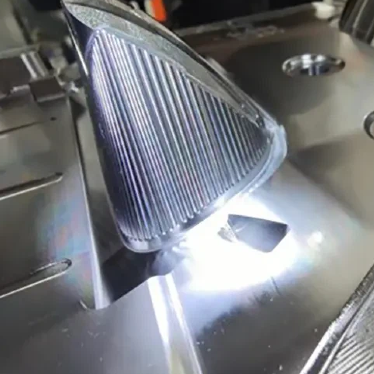
In automotive lighting manufacturing, mould service life has a direct influence on production stability, cost control, and product consistency. A mould may perform well in the first trial stage, but its real value is proven only after it has gone through repeated production cycles while still maintaining dimensional accuracy, stable surface quality, and reliable process behavior. For parts such as headlamp housings, tail lamp lenses, lamp bezels, and internal structural components, tool life is not only a maintenance issue. It also affects delivery reliability, defect rates, and long-term manufacturing efficiency.
From our perspective, auto lamp mould service life is shaped by a combination of decisions rather than a single technical factor. Steel grade, mould design, machining precision, production resin, temperature control, operator practices, and maintenance discipline all play a role. If one of these areas is weak, the mould may begin to wear, drift, or lose stability earlier than expected. If they are handled well together, the tool can remain productive and consistent for a much longer time.
When discussing auto lamp mould durability, steel selection is usually one of the first things worth reviewing. This is because steel influences wear resistance, structural strength, polish retention, corrosion behavior, and the mould’s ability to remain stable under repeated thermal and mechanical stress.
A mould for a high-volume housing project may require stronger wear resistance and structural reliability. A mould for a visible lighting trim or clear component may place greater emphasis on surface stability and polishability. If the steel is chosen only to reduce up-front cost, the mould may still run, but it may not run well for as long as expected.
A durable mould is rarely built on “generic” material selection. In practice, steel should match:
expected production volume
resin characteristics
cavity finish requirements
wear conditions in moving areas
maintenance cycle expectations
Choosing the right steel does not automatically guarantee long life, but choosing the wrong steel often creates limitations that become visible very quickly.
A mould does not wear only because it exists in production. It wears according to how forces, flow, heat, and motion are distributed inside the tool. That is why mould design has such a strong impact on service life.
If local structures are weak, inserts are poorly supported, ejection is unbalanced, or cooling paths create repeated thermal stress, the mould will usually begin to show performance decline faster. Sometimes people assume a mould wore out because of “heavy use,” when in reality the design caused unnecessary stress from the beginning.
Some design-related issues tend to reduce durability more quickly than others:
insufficient support around inserts
sharp stress concentration in structural areas
poor venting that causes unstable molding behavior
weak cooling balance across the cavity
difficult release conditions that increase ejection load
gate positions that create repeated local pressure concentration
These problems may not destroy a mould immediately, but they often shorten its stable service window.
Another point that matters is whether the mould is easy to service. If wear-prone areas are hard to reach, inserts are difficult to replace, or cleaning access is poor, even a technically sound mould may lose effective service life faster simply because routine maintenance becomes harder to perform well.
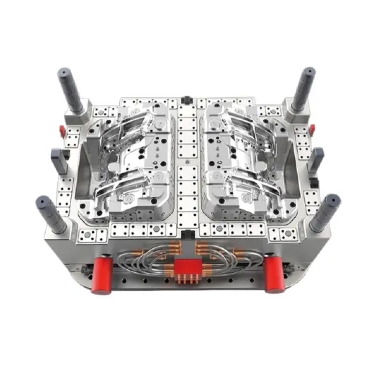
Even the best design and steel selection cannot protect mould life if the manufacturing quality is weak. Machining precision affects the cavity itself, the alignment between components, sealing surfaces, and the consistency of repeated motion. Fitting quality determines whether the tool opens and closes smoothly or whether it experiences friction, impact, and local wear that gradually increase over time.
For auto lamp moulds, small errors are rarely isolated. A slight mismatch in one area may contribute to uneven loading elsewhere. Over many cycles, that turns into wear, instability, and additional maintenance.
When machining or fitting quality is not strong enough, the mould may start to show problems such as:
recurring flash in certain zones
unstable parting line behavior
local surface wear sooner than expected
repeated adjustment during production
inconsistent alignment after maintenance
These are often treated as operating problems, but in many cases they begin with manufacturing accuracy.
The resin used in production can have a major influence on auto lamp mould service life. Some materials are more abrasive. Some require higher processing temperatures. Some create greater risk of corrosion or surface degradation if the mould material and processing conditions are not properly matched.
This means mould life should never be estimated without considering what material will actually be run in production. The same tool may behave very differently depending on resin type, filler content, moisture control, and temperature settings.
Here is a simple overview of how major factors influence mould durability:
Factor | How It Affects Service Life | Typical Risk if Poorly Controlled |
Steel Selection | Determines wear resistance, toughness, and polish stability | Faster cavity wear, weak durability |
Mould Design | Controls stress, thermal balance, and mechanical load | Early fatigue, insert damage, instability |
Machining Precision | Affects alignment, sealing, and surface accuracy | Flash, uneven wear, repeated corrections |
Production Resin | Influences abrasion, temperature load, and corrosion tendency | Accelerated wear or cavity deterioration |
Cooling System | Impacts thermal fatigue and dimensional stability | Hot spots, stress cycling, deformation |
Maintenance Practice | Preserves surface, moving parts, and functional accuracy | More downtime and shorter usable life |
Operating Discipline | Reduces abnormal loading and misuse | Unexpected damage and faster decline |
Cooling is often discussed only from the perspective of cycle time or part shrinkage, but its effect on mould life is just as important. A mould that experiences repeated uneven heating and cooling tends to accumulate stress over time. This can affect inserts, cavity dimensions, and even structural stability in severe cases.
For automotive lighting tooling, where appearance and fit are both critical, thermal imbalance creates two kinds of damage. First, it can reduce part quality. Second, it increases long-term fatigue inside the mould itself.
If the cooling system is not well designed or not working efficiently, we may see:
recurring hot spots
unstable shrinkage behavior
thermal fatigue around critical inserts
dimensional drift over time
more frequent process intervention from operators
So while cooling is often treated as a productivity factor, it is also a durability factor.
Some moulds last longer not because they are inherently superior, but because they are maintained correctly. A strong maintenance routine protects the mould from progressive wear, preserves cavity condition, and allows small issues to be corrected before they develop into major repairs.
In our experience, mould maintenance should not be seen as a reaction to failure. It should be built into the life strategy of the tool from the beginning.
A useful maintenance approach usually includes:
routine cleaning of vents and cavities
inspection of wear-prone sliding or moving areas
checking sealing surfaces before flash becomes serious
monitoring cavity finish on visible-part tooling
recording repeated issues for preventive correction
When maintenance is delayed too long, the mould often loses stable performance before anyone formally considers it “worn out.”
Not all service-life problems begin in design or steel selection. Some come from how the mould is used on the shop floor. If clamping force is excessive, cycle conditions are unstable, resin handling is inconsistent, or the mould is not protected properly during shutdown and restart, wear can accelerate even in a well-built tool.
This is especially relevant in auto lamp mould production because the parts often require controlled appearance and dimensional precision. Rough handling or unstable processing may not break the mould immediately, but it adds repeated stress that gradually reduces service life.
A mould designed for long use still depends on disciplined operation. Without that, theoretical durability often remains only theoretical.
Auto lamp moulds are different from many ordinary plastic moulds because they often support visible, decorative, or optical-related surfaces. This means service life is not judged only by whether the mould can still produce parts. It is judged by whether those parts still meet appearance expectations.
For example, a mould cavity may still be functional from a mechanical standpoint, but if polishing stability declines or minor wear begins to show on visible surfaces, the mould’s practical service life may already be reduced. In this sense, cosmetic standards can make the effective service life shorter than the purely mechanical life.
For visible automotive lighting components, small issues matter more:
cavity wear may become visible on the product sooner
surface scratches or polish decline may affect acceptance rates
localized defects can reduce customer confidence even if dimensions remain acceptable
That is why auto lamp mould durability should always be evaluated together with appearance requirements.、
In practice, the most meaningful measure of auto lamp mould service life is not the theoretical maximum number of shots. It is how long the mould can continue producing acceptable parts with reasonable maintenance, controlled defect rates, and stable operating efficiency.
A mould may physically survive a long time, but if it requires constant adjustment, repeated polishing, frequent insert correction, or rising scrap rates, its real economic value has already declined. That is why we prefer to think in terms of stable usable life rather than mechanical survival alone.
This approach gives a more practical understanding of durability, especially for automotive lighting tooling where precision and appearance both matter.
Auto lamp mould service life is influenced by a wide range of connected factors, including steel selection, structural design, machining precision, production resin, cooling behavior, maintenance practice, and operating discipline. No single area determines durability on its own. A mould lasts longer when the whole system supporting it is planned and managed properly.
For companies involved in automotive lighting manufacturing, understanding what affects auto lamp mould service life helps improve more than tool longevity. It also supports better part quality, lower downtime, more predictable cost, and greater production stability over time. For readers who want to explore reliable auto lamp mould solutions in more depth, Taizhou Huangyan Guangdian Technology Co., Ltd. is worth contacting for further information and practical discussion.
Q: What affects auto lamp mould service life the most?
A: The main factors include steel quality, mould design, machining precision, production resin, cooling efficiency, and maintenance practice.
Q: Does better steel always mean longer auto lamp mould life?
A: Not always. Better steel helps, but it must also match the resin, production volume, and surface requirements of the project.
Q: Why does cooling matter for mould service life?
A: Poor cooling can create thermal stress, hot spots, and dimensional instability, all of which can shorten the mould’s stable usable life.
Q: How can maintenance improve auto lamp mould durability?
A: Regular maintenance helps prevent wear escalation, protects cavity quality, reduces downtime, and keeps the mould working more consistently over time.


