
- All
- Product Name
- Product Keyword
- Product Model
- Product Summary
- Product Description
- Multi Field Search
Views: 0 Author: Site Editor Publish Time: 2026-04-09 Origin: Site
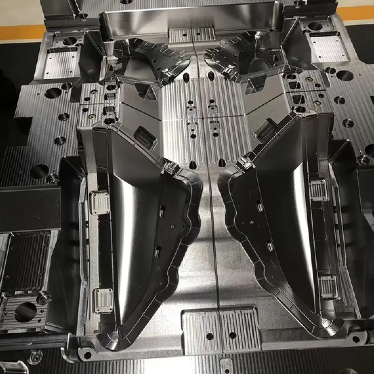
In the automotive lighting industry, the mould behind every headlamp, tail lamp, fog lamp, or signal lamp is more than just a tool. It plays a key role in product precision, appearance consistency, assembly performance, and production efficiency. When we evaluate a new project, we look beyond whether a supplier can build the mould and focus on whether they can support stable manufacturing, reduce risk, and meet market demands.
Choosing the right auto lamp mould supplier is a strategic decision. A reliable supplier helps improve dimensional accuracy, shorten development time, maintain part consistency, and handle future modifications more smoothly. Since auto lamp components often require high precision, complex structures, and strict quality standards, supplier selection should be based on technical capability, clear communication, practical problem-solving, and a strong understanding of automotive quality expectations.
Auto lamp moulds are different from many standard plastic tooling projects. Automotive lighting parts often include clear lenses, reflectors, housings, bezels, and internal structural elements. Each part has its own requirements, but all of them must work together within a limited tolerance window.
A supplier may seem competitive based on price alone, yet the real cost of a mould project is determined over time. If a tool requires frequent rework, produces unstable parts, or causes repeated line interruptions, the original savings disappear quickly. That is why we usually assess suppliers based on total project value rather than initial quotation only.
For lamp products, quality is not judged only by whether the part can be molded. It is judged by how the part looks, fits, seals, assembles, and performs under production conditions. Even minor defects can affect the final product.
A reliable supplier should understand:
surface finish requirements for visible parts
dimensional control for assembly interfaces
gating and cooling design for stable molding
venting strategies for reducing burn marks and trapped air
mould strength and service life under long production runs
When the mould design is not optimized from the beginning, manufacturers may encounter recurring issues such as:
flash on sealing areas
sink marks on visible surfaces
warpage affecting lamp fitment
weld lines in critical cosmetic zones
poor transparency on lens parts
short shots in thin-wall sections
These problems are not always easy to correct after tool completion. That is why supplier capability at the design and engineering stage is so important.
When we select an auto lamp mould supplier, we usually examine several dimensions at the same time. A strong supplier is rarely defined by one strength alone. What matters is a balanced combination of tooling experience, process knowledge, equipment, project management, and after-sales support.
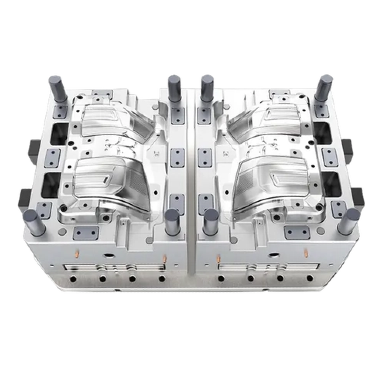
Experience matters in every mould sector, but it matters even more in automotive lighting. Suppliers with a background in auto lamp mould manufacturing are more likely to understand the hidden challenges of the project before they become expensive problems.
For example, a supplier familiar with lamp moulds will already know that appearance standards are usually stricter than for general industrial parts. They will also understand that parting line position, ejector layout, cooling balance, and steel polishing quality can directly affect downstream assembly and appearance.
When reviewing experience, we usually look for evidence such as:
project history in headlamp, tail lamp, or signal lamp tooling
familiarity with clear and decorative automotive parts
understanding of automotive mould standards and inspection logic
ability to discuss previous solutions for warpage, sink, and flow issues
A supplier that can show similar project knowledge generally offers more confidence than one that only presents broad mould-making experience.
A mould supplier should not function only as a fabricator. They should also be a technical partner. In many cases, the real difference between average and excellent tooling is made during design review.
We expect a good supplier to assess part structure, draft angle, wall thickness, shrinkage, ejection, gate location, cooling layout, and maintenance accessibility. They should be willing to point out risks early instead of waiting until trial stages.
Before confirming a supplier, we often ask:
How will the gating system affect cosmetic quality?
What cooling strategy will be used for dimensional stability?
How will insert wear areas be managed?
Which steel grades are recommended for this application?
How will the mould design support easier maintenance later?
The quality of the answers usually reveals how deeply the supplier understands the project.
Even the best design cannot compensate for poor execution. Machining accuracy, EDM quality, polishing skill, fitting precision, and assembly discipline all influence the final result.
A qualified auto lamp mould supplier should have a controlled manufacturing process supported by suitable equipment. This does not mean they need the most expensive machines in every category, but it does mean they should have the right resources for the complexity of the work.
We usually value suppliers that can demonstrate:
precision CNC machining capacity
stable EDM and wire-cutting processes
skilled polishing for optical or cosmetic surfaces
in-house assembly and fitting control
trial moulding capability for validation
inspection systems for critical dimensions
If these capabilities are handled internally or through tightly managed systems, consistency tends to be better.
The service life and stability of an auto lamp mould depend heavily on proper material selection. Using the wrong steel to reduce cost may lead to faster wear, unstable polishing quality, or premature maintenance.
Different lamp components and production volumes require different tooling strategies. The best suppliers do not always recommend the highest-cost option. Instead, they recommend a steel and component solution that matches project volume, part complexity, resin type, and expected maintenance cycle.
Here is a practical comparison we often use during supplier evaluation:
Evaluation Area | What We Expect from a Reliable Auto Lamp Mould Supplier | Why It Matters |
Project Experience | Proven work on headlamp, tail lamp, and related tooling | Reduces design and production risk |
Design Capability | DFM support, mould flow awareness, practical engineering advice | Improves manufacturability early |
Machining Precision | Stable CNC, EDM, fitting, polishing, and inspection processes | Supports consistent part quality |
Steel Selection | Recommendations based on volume, resin, and surface needs | Extends mould life and stability |
Trial Support | Organized mould testing and issue analysis | Speeds up sampling and correction |
Communication | Clear updates, technical feedback, and response speed | Prevents delays and misunderstanding |
After-Sales Service | Maintenance guidance, spare parts support, modification response | Protects long-term production |
Cost Logic | Transparent pricing tied to scope and quality level | Helps control total project cost |
This factor is sometimes underestimated, yet it affects nearly every stage of the project. We have seen technically capable suppliers struggle simply because updates were unclear, revision control was weak, or issue reporting came too late.
An excellent supplier communicates in a way that supports decision-making. They share progress honestly, raise technical concerns early, and document modifications clearly. This becomes especially important when multiple parties are involved, such as product designers, mould engineers, injection teams, and quality personnel.
clear project timelines
regular production progress updates
organized review of drawings and revisions
trial reports with root-cause thinking
prompt answers to technical and commercial questions
In practice, good communication reduces avoidable delays more effectively than many people expect.
In our view, the best supplier relationships are not purely transactional. Auto lamp programs often evolve through updates, new variants, annual volume changes, and appearance revisions. A supplier that understands our standards and expectations becomes more valuable over time.
That is why we prefer suppliers who are willing to build long-term cooperation through consistency, responsiveness, and technical transparency. Once a supplier has demonstrated reliable performance, they become easier to work with on future tooling programs because communication becomes faster and risk becomes easier to manage.
Over time, a dependable supplier can help us:
shorten new project launch cycles
improve consistency across tooling programs
reduce maintenance uncertainty
handle engineering changes more efficiently
create more predictable production performance
For growing manufacturers and automotive component brands, this kind of stability is highly valuable.
Choosing the right auto lamp mould supplier is not only about price. It is about finding a partner with strong engineering support, reliable manufacturing capability, good project management, and clear communication throughout the process.
When evaluating a supplier, we usually focus on experience, design capability, machining precision, material selection, and after-sales service. These factors affect not only mould quality, but also production efficiency and long-term cost. For companies seeking a more reliable automotive lighting partner, Taizhou Huangyan Guangdian Technology Co., Ltd. is worth exploring for further information.
Q: What should we check first when choosing an auto lamp mould supplier?
A: Check whether the supplier has real experience in auto lamp mould projects and understands automotive quality requirements.
Q: Why is design capability important for auto lamp mould manufacturing?
A: Good design helps improve part quality, reduce defects, and make production more stable.
Q: How does mould steel selection influence production performance?
A: The right mould steel improves durability, surface quality, and maintenance performance.
Q: Is the lowest quotation the best option for an automotive lighting mould project?
A: Not always. A lower price may mean less support or lower overall value.


