
- All
- Product Name
- Product Keyword
- Product Model
- Product Summary
- Product Description
- Multi Field Search
Views: 0 Author: Site Editor Publish Time: 2026-04-14 Origin: Site
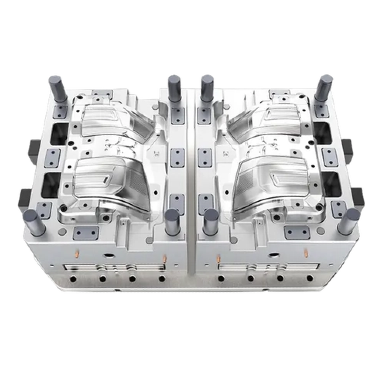
In the automotive lighting industry, mould performance directly affects part quality, production consistency, and long-term operating efficiency. Whether we are producing headlamp housings, tail lamp lenses, bezels, or other lighting components, the mould remains the foundation of stable manufacturing. If the mould performs well, we are more likely to achieve reliable dimensions, clean surfaces, efficient cycle times, and smoother assembly results.
Better performance does not come from one single improvement. In our experience, it comes from a combination of practical design, accurate machining, proper material selection, controlled moulding conditions, and consistent maintenance. When these areas are managed together, an auto lamp mould is more capable of supporting precision production over a longer service life.
A mould may appear technically correct on paper, but if the design does not reflect actual production needs, problems will surface during trial or mass manufacturing. This is especially true for automotive lighting parts, which often combine strict appearance requirements with complex geometry and close assembly tolerances.
That is why one of the most useful auto lamp mould tips is to treat design as the first step in performance control. We usually pay close attention to wall thickness distribution, draft angle, parting line position, gate layout, ejection balance, venting arrangement, and cooling paths. If these elements are not considered early, later adjustments often become more expensive and less effective.
A good mould design should help us achieve several goals at once. It should make the part easier to fill, cool, release, inspect, and maintain. It should also reduce the chance of defects appearing repeatedly during production.
When reviewing a design, we usually ask whether it can:
support dimensional stability
reduce visible surface defects
improve moulding efficiency
simplify future maintenance
allow easier correction if modifications are needed
A design that supports production realities is far more valuable than one that only looks complete in drawings.
Steel selection is one of the most practical factors affecting auto lamp mould performance. It influences cavity durability, polishing quality, wear resistance, maintenance frequency, and long-term dimensional stability. In many projects, steel choice also affects whether the mould remains consistent after extended production cycles.
Some moulds require stronger wear resistance because of output volume or material characteristics. Others require better polishability because the parts have visible or transparent surfaces. In either case, choosing steel simply because it reduces initial cost may lead to faster wear, weaker surface stability, or more frequent repair work later.
For us, better performance usually means matching the steel to the project rather than treating every mould the same way. Resin type, cosmetic requirements, expected volume, and maintenance plans should all be considered before the final decision is made.
Cooling is often discussed in terms of cycle time, but its real influence is much broader. In automotive lighting moulds, cooling directly affects shrinkage behavior, warpage, dimensional repeatability, and part appearance. When the thermal balance is poor, the mould may still produce parts, but consistency becomes harder to control.
A better cooling layout helps maintain stable temperatures across the cavity and reduces the risk of localized deformation. This matters greatly for auto lamp parts because even small dimensional movement can affect assembly fit, sealing performance, or visible alignment.
Instead of treating cooling as a standard layout exercise, we prefer to review it as a precision control tool. We pay close attention to channel placement near thicker regions, areas where heat tends to collect, and visible zones where distortion would be especially noticeable.
The following checks often improve mould performance:
whether heat is removed evenly from critical sections
whether hot spots may cause sink or deformation
whether cooling supports cycle stability over long runs
whether channel layout allows practical maintenance
A well-cooled mould generally performs more consistently and requires fewer process corrections later.
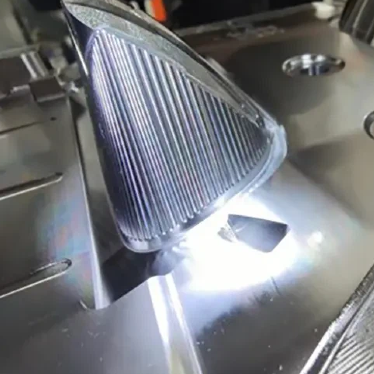
In auto lamp mould manufacturing, gate design influences far more than how the cavity fills. It affects weld line position, flow marks, internal stress, shrinkage balance, and the appearance of visible surfaces. This is why gate strategy plays such a large role in overall mould performance.
For lighting parts, especially those with cosmetic importance, we want the gate to support balanced filling while minimizing its effect on the final part. A poor gate location may lead to unstable surface quality or dimensional movement that becomes difficult to correct later.
Sometimes the most effective improvement is not a major structural change, but a better understanding of how the gate interacts with cavity geometry, wall thickness, and surface expectations. That is why we treat gate planning as an early performance decision rather than a minor technical detail.
One of the most overlooked auto lamp mould tips is to improve venting before problems become obvious. Trapped air can create burn marks, short shots, flow hesitation, unstable filling, and inconsistent part appearance. These defects may appear intermittently, which makes them even more frustrating to diagnose during production.
Good venting supports smoother cavity filling and helps maintain process stability. In complex automotive lighting parts, especially thin-wall sections or flow-end areas, venting deserves as much attention as gating and cooling.
When air cannot escape efficiently, the mould may show unstable behavior even if other design areas are acceptable. Over time, this can increase scrap rates and slow down troubleshooting.
We usually review:
likely air-trap positions
vent accessibility for cleaning
whether vent depth is appropriate
whether gas can escape smoothly in complex regions
Small improvements in venting often produce surprisingly strong gains in consistency.
For automotive lighting components, surface quality is often one of the first things customers notice. This means mould performance must be judged not only by dimensional accuracy, but also by how well the tool maintains clean and stable cavity surfaces throughout production.
A polished cavity, suitable steel, careful fitting, and balanced flow all contribute to better visible quality. If the mould surface is unstable, part appearance will eventually reflect that instability. This is especially important for lamp trims, housings, and transparent components where marks, haze, or uneven gloss can quickly become unacceptable.
Rather than treating surface quality as only a finishing issue, we usually connect it to the whole tooling strategy. Gate position, venting, cooling, and steel choice all influence whether the mould can preserve a consistent cosmetic result.
In many automotive lighting projects, long-term performance matters as much as initial tool completion. One practical way to improve this is by using modular mould construction where appropriate. Inserts and replaceable sections make it easier to manage wear-prone areas, local geometry changes, and future maintenance work.
This does not mean every mould should be highly segmented. However, for critical areas that may require service or adjustment, modularity often provides clear advantages. It can reduce downtime, simplify repairs, and make precision recovery easier after maintenance.
Below is a simple comparison of key areas that often influence better performance:
Performance Area | Practical Tip | Main Benefit |
Mould Design | Review structure with manufacturability in mind | Fewer trial issues and better stability |
Steel Selection | Match steel to resin, volume, and surface needs | Longer service life and better wear resistance |
Cooling Layout | Balance thermal control across critical zones | Less warpage and more consistent dimensions |
Gate Strategy | Optimize filling path and visual impact | Better surface quality and lower stress |
Venting | Improve air release in flow-end regions | Fewer burn marks and short shots |
Surface Control | Protect cavity finish and polish stability | Cleaner visible parts |
Modular Structure | Use inserts for wear or revision areas | Easier maintenance and faster adjustments |
Maintenance Planning | Inspect and service before wear escalates | Better long-term output |
Even an excellent mould concept will underperform if machining and fitting quality are weak. This is why another important tip for better auto lamp mould performance is to pay close attention to execution. CNC accuracy, EDM quality, polishing discipline, and assembly precision all affect how closely the finished mould matches the design intent.
In practice, mould performance depends on both engineering logic and production discipline. If cavity alignment is inconsistent or fitting is rough, the mould may show recurring flash, mismatch, wear, or unstable dimensions. These are not just manufacturing flaws. They become production risks.
For better results, machining and fitting should be treated as part of precision strategy, not only as workshop steps.
Some moulds perform well during early trials but become unstable after repeated use because maintenance was treated reactively rather than strategically. In our experience, planned maintenance is one of the most practical ways to protect long-term mould performance.
A mould that is easier to inspect, clean, and service will usually stay more stable over time. Wear can be corrected earlier, surface issues can be managed before they affect production, and small alignment problems can be addressed before they become larger defects.
To keep mould output stable, we usually recommend:
routine inspection of wear-prone areas
regular cleaning of vents and cavities
checking moving components before failure occurs
monitoring surface condition on visible-part tooling
documenting repeat issues for targeted improvement
Performance is easier to maintain when the tool is serviced systematically rather than only after problems appear.
Even a strong mould cannot show its full capability if process control is inconsistent. Mould performance and moulding conditions always influence each other. If temperature, pressure, cooling time, or handling varies too much, the mould may appear unstable even when its structure is sound.
That is why we see better performance as a shared result between tooling quality and process discipline. A good mould should support stable production, but production settings should also allow the mould to operate within its intended range.
For auto lamp projects, this relationship becomes particularly important because dimensional variation and surface defects can emerge quickly when process windows are not well controlled.
Auto lamp mould performance is shaped by many connected factors, including design quality, steel selection, thermal balance, gating, venting, machining accuracy, maintenance planning, and process stability. Better results rarely come from one isolated improvement. They come from treating the mould as a complete production system.
When we want better performance, we focus on practical details that support stable manufacturing over time. A mould that fills smoothly, cools evenly, maintains surface quality, and stays easier to service will always create greater long-term value. For companies looking to improve automotive lighting tooling results and discuss reliable mould solutions in more depth, readers can learn more from Taizhou Huangyan Guangdian Technology Co., Ltd.
Q: What are the most useful auto lamp mould tips for better performance?
A: The most useful tips include optimizing mould design, choosing suitable steel, improving cooling, refining venting, and planning regular maintenance.
Q: Why does cooling matter in auto lamp mould manufacturing?
A: Good cooling improves dimensional stability, reduces warpage, shortens cycle time, and helps maintain more consistent production results.
Q: How can gate design improve auto lamp mould performance?
A: A proper gate design supports balanced filling, lowers internal stress, reduces surface defects, and improves overall part consistency.
Q: Why is maintenance important for long-term mould performance?
A: Regular maintenance helps control wear, preserve cavity quality, reduce downtime, and keep the mould running more reliably over time.


