
- All
- Product Name
- Product Keyword
- Product Model
- Product Summary
- Product Description
- Multi Field Search
Views: 0 Author: Site Editor Publish Time: 2026-04-21 Origin: Site
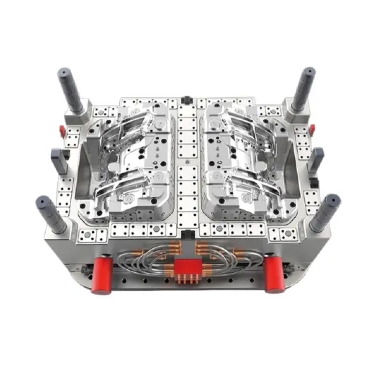
In today’s automotive lighting industry, manufacturers face higher demands for precision, surface quality, and stable performance in large-scale production. At the same time, project timelines are shorter and customers expect more value from every tooling investment. In this environment, advanced auto lamp mould technology is important because it helps improve accuracy, consistency, and overall production efficiency.
From our perspective, advanced mould technology is not just about making parts. It is about supporting long-term performance in real manufacturing. For auto lamp products with complex shapes, strict tolerances, and high appearance requirements, advanced tooling helps reduce errors, improve stability, shorten cycle times, and lower maintenance pressure over time.
One of the main benefits of advanced auto lamp mould technology is better dimensional accuracy. Since automotive lighting parts often include complex contours, tight fit areas, and critical assembly features, higher mould precision helps ensure better fit, more consistent alignment, easier assembly, lower rejection rates, and more stable final product quality.
In auto lamp manufacturing, dimensional accuracy does more than improve fit. It also supports sealing performance, visual alignment, and long-term durability of the assembled unit. A small dimensional deviation in one component can create a larger issue in the finished product.
We see accuracy improvements when mould design, electrode preparation, machining precision, and parting surface control are all managed carefully. Advanced technology is valuable because it improves the consistency of the entire process, not just one stage.
Surface quality is a major concern in automotive lighting production. Many lamp components are visible to end users, which means appearance matters just as much as basic function. Scratches, flow marks, poor polish transfer, and other surface problems can reduce the perceived quality of the final product.
Advanced auto lamp mould technology helps manufacturers achieve more stable and higher-quality surfaces. This includes better steel selection, higher-quality cavity finishing, improved polishing capability, optimized venting, and more balanced filling conditions. When these elements work together, the mould is better able to reproduce the required surface condition consistently over repeated cycles.
For products with demanding visual requirements, this benefit is especially important. A high-quality mould surface supports better product appearance from the beginning of production and helps maintain that standard over time.
Cycle time directly affects production efficiency, cost per part, and machine use, and cooling is often one of the longest steps in auto lamp moulding. Advanced auto lamp mould technology improves cooling through better channel design and more balanced temperature control, which helps shorten cycles, increase output, reduce deformation risk, and improve dimensional stability at the same time.
When mould temperature is controlled evenly, it becomes easier to keep the product shape and surface condition stable. This reduces variation between cycles and helps maintain better overall consistency.
In our view, the best productivity gains come from efficient mould design rather than forcing the machine to run faster at the expense of quality. Advanced mould technology makes that balance easier to achieve.
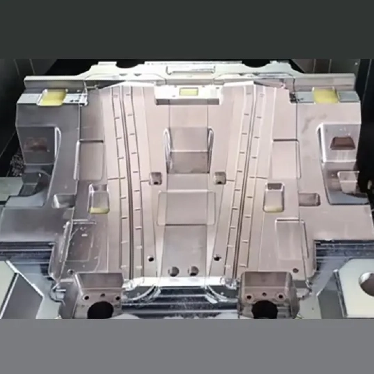
Another major benefit of advanced auto lamp mould technology is better durability. A mould is not only expected to produce good parts at the beginning of a project. It should continue doing so over a long production period with manageable maintenance requirements.
Advanced mould technology supports longer service life through better material selection, stronger structural design, improved wear resistance, optimized moving components, and better heat management. These improvements help reduce the risk of early wear, local damage, thermal fatigue, and dimensional decline.
A durable mould provides important long-term advantages. It reduces downtime, lowers repair frequency, and supports more predictable production planning. For manufacturers handling stable automotive programs or large-volume orders, this is a major benefit.
Below is a practical comparison of how advanced auto lamp mould technology creates value in production:
Aspect | Conventional Approach | Advanced Auto Lamp Mould Technology | Main Benefit |
Dimensional control | Basic precision, more variation over time | Higher machining and structural precision | Better assembly fit |
Surface finish | Greater risk of surface inconsistency | Improved cavity quality and polishing performance | Better product appearance |
Cooling efficiency | Uneven cooling and longer cycles | Optimized thermal balance and channel design | Faster production |
Mould durability | Higher wear and repair frequency | Stronger materials and better stress control | Longer service life |
Process stability | More sensitive to parameter fluctuation | Better flow, venting, and structural balance | Lower defect rate |
Cost efficiency | More hidden long-term costs | Better overall production value | Lower total ownership cost |
A mould may perform well in sampling and still struggle during large-scale production. This is why process stability is one of the most valuable benefits of advanced technology. In real manufacturing, the goal is not simply to produce acceptable parts once, but to keep producing them consistently over days, weeks, and months.
Advanced auto lamp mould technology improves stability by controlling the factors that often lead to variation. These include resin flow balance, venting efficiency, gate design, structural rigidity, cooling uniformity, and motion accuracy in sliders or inserts. When these areas are designed and manufactured to a higher standard, the mould becomes less sensitive to fluctuation in daily production.
Stable production brings several advantages. It reduces the rate of rejected parts, lowers the burden on machine operators, improves scheduling reliability, and supports more consistent delivery performance. In our experience, this kind of stability is one of the clearest signs that advanced mould technology is creating real value.
Automotive lighting design continues to evolve. Lamp products are becoming more complex in shape, more refined in appearance, and more demanding in terms of function and assembly. This means mould technology must also evolve to support these changing design expectations.
Advanced mould technology gives manufacturers more flexibility when dealing with difficult product geometries, thinner wall sections, more intricate surfaces, and stricter fit requirements. A better technical approach in the mould stage helps transform challenging part designs into practical production solutions.
Some lamp parts include deep ribs, sharp transitions, curved surfaces, or special structural features that place more demands on the mould. Advanced design and machining capability make these features easier to manage with better consistency.
As automotive products develop more rapidly, mould suppliers and manufacturers need solutions that respond efficiently to new project demands. Advanced technology improves not only performance, but also the ability to support modern product development cycles more effectively.
Defects are costly in any manufacturing process, but they can be especially damaging in automotive lighting production because appearance and fit are both highly sensitive. If a mould contributes to warpage, flashing, sink marks, flow defects, or poor dimensional repeatability, the production cost can rise quickly.
One of the key benefits of advanced auto lamp mould technology is that it helps reduce these defects through better overall control. Improved venting reduces gas-related issues. Better cooling reduces deformation. Stronger structural precision helps prevent mismatch and flash. More stable filling supports consistent part formation.
Lower defect rates improve both direct and indirect cost performance. Less scrap means better material utilization. Fewer rework operations reduce labor demand. More stable output also helps teams focus on productivity instead of constant troubleshooting.
The materials used in automotive lighting can vary depending on product function, structural demand, and appearance requirements. Some materials are more sensitive to heat, some are more abrasive, and some require stricter surface control to achieve the expected result.
Advanced mould technology is better suited to handle these requirements because it includes more thoughtful choices in steel grade, surface finishing, cooling design, and structural support. When the mould is designed with material behavior in mind, production becomes more reliable and the risk of mould damage or product defects is lower.
This compatibility becomes especially important when projects require materials that must meet both visual and technical standards. A mould that handles the material well can protect product quality while also extending the mould’s useful life.
Maintenance is part of every mould’s working life, but not all moulds create the same maintenance burden. A mould built with advanced technology is usually easier to maintain and less likely to require repeated corrective repair. This is because the structure is better balanced, critical components are better protected, and wear-prone areas are more carefully controlled.
In our view, this is one of the most practical benefits of advanced auto lamp mould technology. Customers do not only value a mould that starts well. They value a mould that remains manageable after long-term use.
A mould with stronger durability and better process stability is less likely to create sudden problems during production. This helps protect delivery schedules and reduce pressure on both maintenance teams and machine operators.
When mould structure and component planning are well considered, routine servicing becomes more efficient. This reduces downtime and makes preventive maintenance more effective.
Some buyers still look at mould technology mainly through the lens of initial tooling cost. However, from our perspective, the real value of a mould should be judged over its full production life. A mould with stronger technology may involve a higher initial investment, but it often creates better overall economics in the long run.
This happens because advanced auto lamp mould technology supports:
Lower defect rates
Higher production efficiency
Reduced maintenance cost
Longer service life
More predictable production planning
When these benefits are combined, the total cost per part can become much more favorable. In many cases, the difference between a standard mould and an advanced mould is not simply the tool price. It is the difference between short-term savings and long-term manufacturing value.
The key benefits of advanced auto lamp mould technology include better accuracy, improved surface quality, faster cooling, longer mould life, stronger stability, lower defect rates, easier maintenance, and better cost efficiency. These advantages work together to improve overall production performance.
For automotive lighting manufacturers, advanced mould technology supports better product quality, higher efficiency, and stronger long-term competitiveness. If you want to improve tooling performance or start a new project, you can contact Taizhou Huangyan Guangdian Technology Co., Ltd. for more information.
Q: What are the key benefits of advanced auto lamp mould technology?
A: Advanced auto lamp mould technology improves dimensional accuracy, surface quality, cooling efficiency, process stability, mould durability, and long-term production cost control.
Q: How does advanced auto lamp mould technology improve product quality?
A: It helps create more precise parts, better surface finishes, and more consistent molding results, which improves the overall quality of automotive lighting components.
Q: Can advanced auto lamp mould technology reduce production costs?
A: Yes. It can reduce defect rates, shorten cycle times, lower maintenance needs, and extend mould service life, all of which help improve cost efficiency.
Q: Why is advanced auto lamp mould technology important for mass production?
A: It supports stable performance over long production runs, helping manufacturers maintain consistent quality, reduce downtime, and improve delivery reliability.


