
- All
- Product Name
- Product Keyword
- Product Model
- Product Summary
- Product Description
- Multi Field Search
Views: 0 Author: Site Editor Publish Time: 2025-07-22 Origin: Site
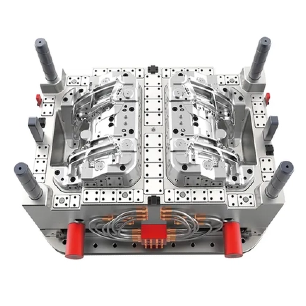
Auto Lamp Light Guide Strips are integral components in modern automotive lighting systems, and the design of the Auto Lamp Mold plays a crucial role in ensuring their quality and functionality. These light guide strips are not only designed for aesthetic appeal but also for efficient light transmission. Whether for headlights, taillights, or ambient interior lighting, the precision with which these strips are molded is critical to their performance. Achieving flawless light diffusion, transparency, and durability requires sophisticated Auto Lamp Mold designs that account for several factors—material selection, mold temperature control, surface texture, and cooling systems. Each of these factors contributes to ensuring that the light guide strips perform optimally and meet industry standards for both safety and visual appeal. This article explores the key considerations that go into designing molds for auto lamp light guide strips, ensuring the highest quality and precision.
The choice of materials for auto lamp light guide strips is essential to achieving the desired transparency and light transmission. Two of the most commonly used materials for these applications are PMMA (Polymethyl Methacrylate) and PC (Polycarbonate). These materials are known for their optical clarity and durability, making them ideal for use in automotive lighting.
PMMA is a widely used material for light guide strips due to its high transparency, excellent UV resistance, and ease of processing. It allows light to pass through with minimal distortion, ensuring even light distribution. PMMA is also less prone to yellowing over time, which is a crucial factor for the longevity of automotive lighting.
On the other hand, PC offers superior impact resistance and toughness compared to PMMA, making it ideal for use in environments where durability is paramount, such as in vehicle headlights and taillights. While PC may not offer the same level of transparency as PMMA, its strength and resilience in harsh conditions (such as extreme temperatures) make it a preferred material for specific applications.
When selecting the appropriate material, it’s essential to consider not just the transparency but also the material's flowability during the injection molding process. Light guide strips are typically molded using high-precision injection molds, and poor material flowability can lead to incomplete filling or defects, affecting the light transmission and overall quality of the final product. Therefore, controlling the viscosity and flow rate of the material during the molding process is critical.
Achieving uniform mold temperature during the injection molding process is one of the most crucial factors in producing high-quality light guide strips. These components, known for their high transparency, are sensitive to temperature fluctuations, which can directly affect their optical properties. Any inconsistencies in mold temperature can lead to defects such as uneven transparency, haziness, or warping, compromising the functionality and appearance of the final product.
For materials like PMMA and PC, the mold temperature must be maintained within a precise range to prevent the material from solidifying too quickly or unevenly. Rapid cooling or inconsistent temperatures can result in the formation of bubbles, cracks, or other surface imperfections, which negatively impact the light guide strip’s clarity. Therefore, careful temperature control is essential for achieving the desired optical performance.
Techniques for Mold Temperature Control:
To ensure uniform temperature, mold cooling systems must be meticulously designed. This includes incorporating multiple cooling channels throughout the mold to promote even heat dissipation. These channels help distribute temperature evenly, preventing areas of the mold from overheating or cooling too quickly.
Mold temperature controllers are often employed to monitor and regulate the mold’s temperature throughout the injection molding cycle. These advanced control systems are equipped with sensors to ensure the mold remains within the optimal temperature range, adjusting automatically as needed. By maintaining a consistent temperature, these systems minimize the risks of defects such as inconsistent cooling and material stress, allowing for the production of light guide strips with high optical quality and uniformity.
The surface finish of the light guide strip is another critical aspect of the molding process. Since these components are designed to transmit light efficiently, the surface must be smooth and free from imperfections such as bubbles, scratches, or surface contamination. Any defects in the surface finish can cause light scattering or distortion, which negatively affects the performance of the light guide strip.
The mold surface texture is a key consideration when designing the mold. A highly polished mold surface is necessary to create a smooth surface on the light guide strip. However, in some cases, manufacturers may opt to introduce tiny textures to the mold surface to create specific light effects. For example, light scattering effects can be achieved by adding microscopic textures to the mold, which can create a diffused light pattern in the final product.
Techniques for Achieving Smooth Surfaces:
Achieving a high-quality surface finish requires precision in mold fabrication. The mold surface should be polished using high-grade polishing methods, such as diamond polishing or electro-polishing. These methods remove any roughness or imperfections that might affect the light guide strip’s appearance and light transmission.
When texture is required, specialized mold designs incorporate micro-patterning techniques. These patterns are often used in automotive interior lighting, where the light guide strips may serve aesthetic purposes, such as creating ambient lighting or highlighting features inside the vehicle cabin.
Efficient cooling is another critical component of the mold design for light guide strips. As light guide strips are thin and delicate, even heat distribution is essential for ensuring that the final product remains dimensionally stable and free from defects.
The cooling system design plays a major role in controlling the cooling rate of the molded part. Inconsistent cooling rates can cause deformation, warping, or internal stresses that reduce the performance and quality of the light guide strip. Uneven cooling also increases cycle times, which can slow down production and increase costs.
Strategies for Effective Cooling:
Cooling channels are carefully incorporated into the mold to ensure even cooling. The design of these channels must be optimized to provide consistent cooling across all areas of the mold, especially in areas where the material is thicker or more likely to retain heat. Cooling is typically achieved through a combination of water-cooled channels, air cooling, and sometimes gaseous nitrogen for even faster cooling.
Advanced cooling systems include features such as hot runner technology, which helps control the temperature of the material during injection, and thermal conductive materials for faster and more uniform cooling. Using these systems effectively minimizes cycle times and ensures that light guide strips maintain their high optical performance and dimensional accuracy.
The design of injection molds for auto lamp light guide strips is a critical aspect of producing high-quality automotive lighting systems. Achieving the perfect balance between material selection, mold temperature control, surface finish, and cooling system design is essential for meeting the rigorous demands of the industry. Whether enhancing a vehicle's aesthetic or ensuring its functional performance, the precision of the mold directly impacts the final product's durability and optical properties.
At Taizhou Huangyan Guangdian Technology Co., Ltd., we specialize in crafting high-precision injection molds tailored for auto lamp light guide strips. Our expert team works with advanced materials, optimized temperature control systems, and state-of-the-art cooling techniques to ensure the flawless production of every light guide strip. With years of experience, we offer customized mold solutions that meet the highest industry standards.
If you're looking for reliable, high-quality molds for your automotive lighting needs, Taizhou Huangyan Guangdian Technology Co., Ltd. is here to assist you. Get in touch today to explore our mold designs and discuss your specific requirements for superior lighting components.


